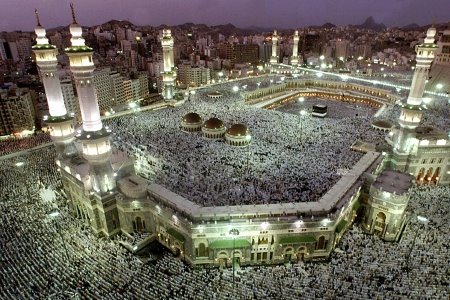


The Straight Path
Surah al-A'la
(The Most High)
" Glorify the Name of your Lord, Most High, Who has created and then proportioned it. And Who has measured and then guided. And Who brings out the pasturage (plants), And then makes it dark stubble. We shall make you to recite, so you shall not forget it, Except what Allah may will. He knows what is apparent and what is hidden. And we shall make easy for you, the easy way. Therefore, remind (men) in case the Reminder profits (them). The Reminder will be received by him who fears (Allah), But it will be avoided by the wretched, Who will enter the great Fire. There he will neither die nor live. Indeed, whosoever purifies himself shall achieve success, And remembers the Name of his Lord. Nay, you prefer the life of this world, Although the Hereafter is better and more lasting. Verily, this is in the former Scriptures-- The Scriptures of Abraham and Moses"
All the Praises are for Allah and Salutation is for the Messenger and his family and all those that follow him doing good works until the Day of Resurrection. The very first generation of Muslims that lived and established Islaam in their lives with Muhammad , the son of Abdullah, had glory and triumph that no nation that existed before them or any that came after them achieved. This is a reality which no one denies. Thus we find that every conscious Muslim dreams about this reality and so in his own way tries to work for this glory to return within his life and the life of those around him. However, to dream is one thing and the reality is another. The Muslims although they are now the fastest growing nation, are also the most divided. This division was predicted by the messenger , who said: The Jews were divided into seventy one (71) groups and the Christians were divided into seventy two (72) any my ummah (nation) will divide into seventy three (73), each of which would be in the Fire except one... Although this prediction is established in the Hadeeth above, yet it is not approved by Islaam. On the contrary, Allah had commanded the Muslims to unite, He said: Hold fast all together to the rope of Allah and be not divided.. [Al Quraan 3:103] The division of this ummah started very early after the death of the messenger of Allah . After Islaam became strong and its enemies found that they could not defeat it physically they started to attack it by undermining the faith of the common people and those newly converted to Islaam by introducing new concepts that were alien to the Islaam brought by Muhammad . This wave of attack brought about an almost total standstill to the quest for sound knowledge and facilitated the easy spread of deviant concepts and new innovations in this deen. The vast majority of Muslims are now totally lost and their understanding of Islaam was very much diluted with deviant ideas which allowed anyone who wanted to captialize on the ignorant to do so with ease. People now lost the correct way and so they did not know what method to use to understand this deen. Therefore, instead of referring matters of belief ('Aqeeda) to the Quraan and the Sunnah they turned to the books of philosophy which, although written by Muslims, were all affected by the Greek, Persian and other prevelant thoughts of that time. Issues of fiqh on the other hand were completely restricted to the four Imaams. And so as time went by the people became totally fanatical about their Madhab (school of thought). This caused the noble Imaams to be treated by their followers as the prophets ought to be treated (i.e. as if they were protected from errors). Whatever any of them said was taken as totally correct by those who followed them (as if it were revelation). Even if a verse from the Quraan or an authentic saying of the Messenger was brought as an argument against what the Imaam said, their followers left what Allah or the messenger said and followed their Imaams. This dangerous state of affair led to blind following (Taqleed) of humans at the expense of revelation. Blind following of other than Allah and His messenger along with widespread ignorance was definately the major sources of all the division that occurred in the Deen. This was now what Islaam became to the people. And this attitude closed the doors of Ijtihad. Proof were no longer looked into to understand anything in the Islaam and the Quraan and the sunnah of the messenger which must be used for our guidance now became means for the Muslim of acquiring blessings (Barakah). This further led to the state where anyone could now give Fatawas (Legislative rulings in Islaam) and also say anything he felt like saying about Islaam because there was no threat that anyone would ask for proof from the Quraan or the Sunnah. On the other hand the people who were listening to him had no basis to determine whether what they are hearing is correct or not because they themselves have lost any attachment to sources of Islaamic law. This condition of ignorance and blind following was also predicted by the messenger , who said: Verily, Allah does not take away knowledge by snatching it from the people, but (this is done) by causing (the death) of the scholars until none of them is left alive. People would then appoint ignorant leaders for themselves who would be consulted in matters of religion and they would give Fatawas without knowledge, falling into misguidance and misguiding others. [Muslim]. The Solution The messenger of Allah said: O mankind, I am leaving two things with you, if you cling to them you will never go astray. The Book of Allah and my way of life. [Al-Haakim and Al-Baihaqi]. This hadeeth is laying the bases for the Muslim if he does not want to go astray. It follows, therefore, that if at anytime some one finds himself going astray, then he is not holding on to one or both of these sources. The problem we face, however, is that every Muslim stand by this claim that they are holding on to the Quraan and the Sunnah So how can anyone determine whose claim is correct? The messenger of Allah left this way very clear for us as he said: I am leaving you on a clear way, its night is like its day and none turns away from it except that he would be destroyed. He told us that the way he left is very clear and then in the following Ah-Hadeeth he explained for us what it is. He said: The Jews were divided into seventy one groups and the Christians were divided into seventy-two and my ummah will be divided into seventy three and each of them will be in the fire except one. The companions asked: "Who are they, O messenger of Allah?" He said: They are those who are on the like of what I and my companions are on. And in another Hadeeth, he said: The best people is my generation then those that follow them, then those who follow them. In the above hadeeth the prophet is telling us the way to understand the Quraan and the Sunnah is the way the sahabas understood and practised it. If the understanding of the Quraan and the sunnah of any group coincides with the understanding of the Companions in all issues, then that group would be the one that is on the truth. It must also be very clear that only one group of all the groups that are existing is on the correct way as is explained in the hadeeth. One way The saying of Allah further emphasises that there is only one way. He said: Whoever opposes the messenger after the guidance has been clearly shown to him, and follows other than the way of the believers, We shall keep him in the path he has chosen, and burn him in hell, and what an evil destination. [Al-Quraan 4:115] Who were the believers during the time the Quraan was being revealed? Were they not only the messenger and the first generation of believers? So Allah is also making it very clear that there is only one way i.e. the way of the messenger and his companions. My brothers and sisters, life is short so we must make sure that before we die we serure the key that will take us to Al-Jannah(Heaven). Let us not follow Allah's religion based on customs and based on our desires but let us keep an open mind and beg Allah to guide us to the Truth that was left very clear for us by Him and His messenger . May Allah guide us all to the straight way of Islaam. Ameen!
Sunday, March 1, 2009


TAQWA...what every soul craves!!
Taqwa
What every soul craves...
[www.quranicverse99.tripod.com]
"It is not righteousness that you turn your faces to the East and the West; but righteous is he who believes in Allah and the Last Day and the angels and the Scripture and the Prophets; and gives his wealth, for love of Him, to kinsfolk and to orphans and the needy and the wayfarer and to those who ask, and to set slaves free; and observes proper worship and pays the poor due. And those who keep their treaty when they make one, and the patient in tribulation and adversity and time of stress. Such are they who are sincere. Such are the God fearing (those with taqwa)." (Surah al-Baqarah 2:177)
The concept of taqwaa is always linked to ibaadah in the Qu'raan. 'Ibaadah can be defined as: to do what Allah has commanded and to avoid what He has prohibited. 'Ibaadah has also been defined as a concept that includes all actions that Allah loves and approves of, whether they are actions of the heart, the tongue or the limbs. So taqwaa is linked with doing what is correct and avoiding that which is wrong. Taqwaa is the fruit of doing the actions of 'Ibaadah. In other words, if one does what Allah has commanded him to do, and abstains from that which he has been forbidden, he will achieve taqwaa. Allah mentions in His Book ( that means ): " O you who believe ! Fasting is prescribed for you as it was prescribed for those before you, that you may become muttaqoon ( those who have taqwaa or piety )." [ Al-Baqarah 2:183 ]. In this aayah and in many others, Allah has shown us that taqwaa is the result or fruit of doing actions of ibaadah. The meaning of Taqwaa Now that we have clarified how to achieve taqwaa, we define what the concept of taqwaa means. Taqwaa means: to cleanse or purify the heart and the soul. This fact is proven by some ayaat in Suorat ush-Shams in which Allah (T) says (what means) " By the sun and its brightness, by the moon as it follows it, by the day as it shows its brightness, by the night as it conceals it, by the heaven and its wondrous make, by the earth and all its expanse, and by the soul and He Who perfected it in proportion, then He showed it what is wrong for it and what is right for it - indeed he succeeds who purifies it, and he fails who corrupts it." [ Ash-Shams 91:1-10 ]. Allah begins this soorah by taking seven oaths. Whenever Allah begins a soorah or an ayaah with an oath, He (T) does so to bear witness to the fact that whatever follows this oath is very important and essential for us to understand. Therefore, we should pay very close attention to what is being said, and reflect upon its meanings. To cleans one's heart and to purify the soul, one must perform righteous actions that Allah has enjoined upon us, and our destruction lies in doing the actions that Allah has forbidden. As Allah is the Guardian and Protector of the Soul, we should do every good deed hoping for Allah's Mercy and fearing His Punishment, having full reliance and trust in Him (T). Purification of the Soul Among the missions of the Prophet. Allah sent him with the command to purify the souls of the Muslims in particular, and of mankind in general. Allah (T) says (what means) " He it is who sent among the unlettered ones a Messenger from among themselves, reciting to them His ayaat, purifying them, and teaching them the Book and the Hikmah, while before they had been in error." [ Al-Jumu'ah 62:2 ]. In this ayaah the word Hikmah is often translated as wisdom. Imaam ash-Shafi', one of the greatest scholars of Islaam, said that when Allah mentions Hikmah in the Qur'aan it refers to the Sunnah of the Prophet. In addition to this ayaah, we see that the Prophet, was sent with three tasks: 1) To teach the Qur'aan. 2) To teach the Sunnah. 3) To show the means of purifying the soul. This purification is obtained by doing the proper acts of 'ibaadah and by avoiding sins and disobedience. Conditions for Attaining Taqwaa How does a person know that his acts of 'ibaadah are helping him to achieve taqwaa ? To develop taqwaa, one must fulfill the following conditions:- 1) Ikhlaas, sincere intention that the act is performed purely for the pleasure of Allah, out of love for Him, while hoping for His reward and mercy, as well as fearing His anger and punishment if He is disobeyed. 2) To do the deed in accordance with the authentic Sunnah. To have the necessary knowledge of the 'ibaadah that is being performed. To know how the Prophet. ..performed the action and proper times for the performance of that action. Concerning Ikhlaas (sincerity), it must be present both before and after performing the deed, with no riyaa (showing off) or sum'ah (doing things to be seen or heard by people). For instance, after doing a good deed, someone tells others, " Look at all the good I have been doing ", or " I'm such a marvelous person because I do such and such". This formula, if used to achieve taqwaa, is scientific, in that if you follow it, while fulfilling all of its conditions and their rights, you will achieve taqwaa Insha Allah. The Effect of Taqwa A person once asked the Prophet SAW, "O Messenger of Allah! Give me some advice!" He replied, "I advise you to fear Allah because it is the head of everything." The likeness of one who has the awareness of the reality of Allah's existence in every single act, in every single decision, in every single word and thought is the likeness of a dry, curled up desert plant that receives a drop of moisture, which will make it spread out its leaves and sink its roots and flourish and blossom. Similarly, one who feels Allah in their heart at every breath they take and in every aspect of their lives and in everything they do, from the important and profound to the everyday, simple tasks becomes aware of the great thirst, the Great Dependence, and the great joy his/her life had been lacking without this devotion, without this urge to serve (the Creator). And with it, they strive for the pleasure of their Lord, finding fulfillment and happiness in this world and the next.
What every soul craves...
[www.quranicverse99.tripod.com]
"It is not righteousness that you turn your faces to the East and the West; but righteous is he who believes in Allah and the Last Day and the angels and the Scripture and the Prophets; and gives his wealth, for love of Him, to kinsfolk and to orphans and the needy and the wayfarer and to those who ask, and to set slaves free; and observes proper worship and pays the poor due. And those who keep their treaty when they make one, and the patient in tribulation and adversity and time of stress. Such are they who are sincere. Such are the God fearing (those with taqwa)." (Surah al-Baqarah 2:177)
The concept of taqwaa is always linked to ibaadah in the Qu'raan. 'Ibaadah can be defined as: to do what Allah has commanded and to avoid what He has prohibited. 'Ibaadah has also been defined as a concept that includes all actions that Allah loves and approves of, whether they are actions of the heart, the tongue or the limbs. So taqwaa is linked with doing what is correct and avoiding that which is wrong. Taqwaa is the fruit of doing the actions of 'Ibaadah. In other words, if one does what Allah has commanded him to do, and abstains from that which he has been forbidden, he will achieve taqwaa. Allah mentions in His Book ( that means ): " O you who believe ! Fasting is prescribed for you as it was prescribed for those before you, that you may become muttaqoon ( those who have taqwaa or piety )." [ Al-Baqarah 2:183 ]. In this aayah and in many others, Allah has shown us that taqwaa is the result or fruit of doing actions of ibaadah. The meaning of Taqwaa Now that we have clarified how to achieve taqwaa, we define what the concept of taqwaa means. Taqwaa means: to cleanse or purify the heart and the soul. This fact is proven by some ayaat in Suorat ush-Shams in which Allah (T) says (what means) " By the sun and its brightness, by the moon as it follows it, by the day as it shows its brightness, by the night as it conceals it, by the heaven and its wondrous make, by the earth and all its expanse, and by the soul and He Who perfected it in proportion, then He showed it what is wrong for it and what is right for it - indeed he succeeds who purifies it, and he fails who corrupts it." [ Ash-Shams 91:1-10 ]. Allah begins this soorah by taking seven oaths. Whenever Allah begins a soorah or an ayaah with an oath, He (T) does so to bear witness to the fact that whatever follows this oath is very important and essential for us to understand. Therefore, we should pay very close attention to what is being said, and reflect upon its meanings. To cleans one's heart and to purify the soul, one must perform righteous actions that Allah has enjoined upon us, and our destruction lies in doing the actions that Allah has forbidden. As Allah is the Guardian and Protector of the Soul, we should do every good deed hoping for Allah's Mercy and fearing His Punishment, having full reliance and trust in Him (T). Purification of the Soul Among the missions of the Prophet. Allah sent him with the command to purify the souls of the Muslims in particular, and of mankind in general. Allah (T) says (what means) " He it is who sent among the unlettered ones a Messenger from among themselves, reciting to them His ayaat, purifying them, and teaching them the Book and the Hikmah, while before they had been in error." [ Al-Jumu'ah 62:2 ]. In this ayaah the word Hikmah is often translated as wisdom. Imaam ash-Shafi', one of the greatest scholars of Islaam, said that when Allah mentions Hikmah in the Qur'aan it refers to the Sunnah of the Prophet. In addition to this ayaah, we see that the Prophet, was sent with three tasks: 1) To teach the Qur'aan. 2) To teach the Sunnah. 3) To show the means of purifying the soul. This purification is obtained by doing the proper acts of 'ibaadah and by avoiding sins and disobedience. Conditions for Attaining Taqwaa How does a person know that his acts of 'ibaadah are helping him to achieve taqwaa ? To develop taqwaa, one must fulfill the following conditions:- 1) Ikhlaas, sincere intention that the act is performed purely for the pleasure of Allah, out of love for Him, while hoping for His reward and mercy, as well as fearing His anger and punishment if He is disobeyed. 2) To do the deed in accordance with the authentic Sunnah. To have the necessary knowledge of the 'ibaadah that is being performed. To know how the Prophet. ..performed the action and proper times for the performance of that action. Concerning Ikhlaas (sincerity), it must be present both before and after performing the deed, with no riyaa (showing off) or sum'ah (doing things to be seen or heard by people). For instance, after doing a good deed, someone tells others, " Look at all the good I have been doing ", or " I'm such a marvelous person because I do such and such". This formula, if used to achieve taqwaa, is scientific, in that if you follow it, while fulfilling all of its conditions and their rights, you will achieve taqwaa Insha Allah. The Effect of Taqwa A person once asked the Prophet SAW, "O Messenger of Allah! Give me some advice!" He replied, "I advise you to fear Allah because it is the head of everything." The likeness of one who has the awareness of the reality of Allah's existence in every single act, in every single decision, in every single word and thought is the likeness of a dry, curled up desert plant that receives a drop of moisture, which will make it spread out its leaves and sink its roots and flourish and blossom. Similarly, one who feels Allah in their heart at every breath they take and in every aspect of their lives and in everything they do, from the important and profound to the everyday, simple tasks becomes aware of the great thirst, the Great Dependence, and the great joy his/her life had been lacking without this devotion, without this urge to serve (the Creator). And with it, they strive for the pleasure of their Lord, finding fulfillment and happiness in this world and the next.
Sunday, February 15, 2009
The Life of This World Is a Transient Shade!!
The Life of This World Is a Transient Shade
Abdul Malik Al-Qasim
Excerpted from "The Life of This World Is a Transient Shade" © 1999 IIPH
"Truly, the life of this world is nothing but a [quick passing] enjoyment, and verily, the Hereafter that is the home that will remain forever." [Qur'an, 40:39]
"And know that your possessions and your children are but a trial and that surely with Allah is a mighty reward." [Qur'an 8:28]
"And strain not your eyes in longing for the things We have given for enjoyment to various groups of them [polytheists], the splendour of the life in this world, that We may test them thereby." [Qur'an 20:131]
"And put forward to them the example of the life of this world: It is like the water [rain] which We send down from the sky, and the vegetation of the earth mingles with it, and becomes fresh and green. But [later] it becomes dry and broken pieces, which the winds scatter. And Allah is Able to do everything." [Qur'an 18:45]
"My similitude and that of the life of this world is that of a traveler who took a rest at mid-day under a shade of a tree and then left it." [Ahmad, at-Tirmidhi, Ibn Majah and al-Hakim]
"Be in this world like a stranger, or a wayfarer." [Bukhari]
"When Allah (`azza wa jall) gives a person whatever he loves of the worldly benefits despite his disobedience, then that is a gradual enticement." [Ahmad and al-Bayhaqi]
"The Hour has drawn near, whereas the people have become more greedy for the life of the world and more remote from Allah." [Al-Hakim]
Yahya ibn Mu`adh, may Allah be pleased with him, said: "I don't order you to abandon life but to abandon sins. Abandoning life is a virtue and abandoning sins is a duty, so your need for this latter is greater than your need for the former."
Dear brother/sister,
This life is full of benefits and fortunes: The land on which man constructs his dwelling, and grows his food, drinks, dress... etc., all represents the nourishment for man's body and soul proceeding towards Allah. Man of course cannot do without these vital necessities. the one who takes from these necessities only according to his real need as commanded by Allah is saved and praised. But whoever takes more than necessary for himself falls into covetousness which will lead him into harm instead of benefit, and consequently divert him from the right path towards Allah and the Hereafter.
Likewise, taking less than required of the worldly benefits is harmful because the human body needs to satisfy certain basic needs, and that will increase its capability to worship Allah perfectly.
`Amr ibn Abdullah said: "The life of this world and the Hereafter, in the heart of a person, are like the two scales of a balance, when the one becomes heavier the other becomes lighter."
Al-Hasan Al-Basri was asked: "Who is going to cry more than the others on the Day of Resurrection?" He answered, "A man on whom Allah subhanahu wa ta`ala has bestowed His Grace and who uses that for Allah's disobedience."
`Umar ibn Al-Khattab said: "Renouncing the worldly pleasures is a comfort for both the human heart and body."
Yahya ibn Mu`adh said: "How can I love this life? A sustenance is decreed for me in it which keeps me alive and helps me to perform the deeds of obedience that will lead me to Paradise."
`Abdullah ibn `Umar, radhiallahu `anhu, said: "The life of this world is Paradise for a disbeliever and a prision for a believer. When a believer dies and departs from this world, he feels himself like a prisoner who was released to go freely on the spacious earth."
`Umar ibn `Abdil `Aziz said: "The life of this world is not your permanent dwelling because Allah has decreed that it should perish and that all its dwellers should leave it. How many a populated area that will soon come to ruins, and how many a happy resident who will soon leave his residence. You should therefore leave this wolrd in the best way you can, and the best of provisions is piety. Since the life of this world is neither a home nor an abode for the believer, he should be in it, either a stranger whose objective is to take the required provisions and return home, or a traveler who is residing nowhere and who is proceeding day and night to reach a country of residence."
A poet said: "Man should take the minimum possible of the worldly pleasures, because he is leaving for a fixed appointment; turn his eyes away from this life and its ornaments, make all the efforts to keep away from its lusts, because it is a place of temporary pleasures and trials, and all the people in it will perish."
Abdul Malik Al-Qasim
Excerpted from "The Life of This World Is a Transient Shade" © 1999 IIPH
"Truly, the life of this world is nothing but a [quick passing] enjoyment, and verily, the Hereafter that is the home that will remain forever." [Qur'an, 40:39]
"And know that your possessions and your children are but a trial and that surely with Allah is a mighty reward." [Qur'an 8:28]
"And strain not your eyes in longing for the things We have given for enjoyment to various groups of them [polytheists], the splendour of the life in this world, that We may test them thereby." [Qur'an 20:131]
"And put forward to them the example of the life of this world: It is like the water [rain] which We send down from the sky, and the vegetation of the earth mingles with it, and becomes fresh and green. But [later] it becomes dry and broken pieces, which the winds scatter. And Allah is Able to do everything." [Qur'an 18:45]
"My similitude and that of the life of this world is that of a traveler who took a rest at mid-day under a shade of a tree and then left it." [Ahmad, at-Tirmidhi, Ibn Majah and al-Hakim]
"Be in this world like a stranger, or a wayfarer." [Bukhari]
"When Allah (`azza wa jall) gives a person whatever he loves of the worldly benefits despite his disobedience, then that is a gradual enticement." [Ahmad and al-Bayhaqi]
"The Hour has drawn near, whereas the people have become more greedy for the life of the world and more remote from Allah." [Al-Hakim]
Yahya ibn Mu`adh, may Allah be pleased with him, said: "I don't order you to abandon life but to abandon sins. Abandoning life is a virtue and abandoning sins is a duty, so your need for this latter is greater than your need for the former."
Dear brother/sister,
This life is full of benefits and fortunes: The land on which man constructs his dwelling, and grows his food, drinks, dress... etc., all represents the nourishment for man's body and soul proceeding towards Allah. Man of course cannot do without these vital necessities. the one who takes from these necessities only according to his real need as commanded by Allah is saved and praised. But whoever takes more than necessary for himself falls into covetousness which will lead him into harm instead of benefit, and consequently divert him from the right path towards Allah and the Hereafter.
Likewise, taking less than required of the worldly benefits is harmful because the human body needs to satisfy certain basic needs, and that will increase its capability to worship Allah perfectly.
`Amr ibn Abdullah said: "The life of this world and the Hereafter, in the heart of a person, are like the two scales of a balance, when the one becomes heavier the other becomes lighter."
Al-Hasan Al-Basri was asked: "Who is going to cry more than the others on the Day of Resurrection?" He answered, "A man on whom Allah subhanahu wa ta`ala has bestowed His Grace and who uses that for Allah's disobedience."
`Umar ibn Al-Khattab said: "Renouncing the worldly pleasures is a comfort for both the human heart and body."
Yahya ibn Mu`adh said: "How can I love this life? A sustenance is decreed for me in it which keeps me alive and helps me to perform the deeds of obedience that will lead me to Paradise."
`Abdullah ibn `Umar, radhiallahu `anhu, said: "The life of this world is Paradise for a disbeliever and a prision for a believer. When a believer dies and departs from this world, he feels himself like a prisoner who was released to go freely on the spacious earth."
`Umar ibn `Abdil `Aziz said: "The life of this world is not your permanent dwelling because Allah has decreed that it should perish and that all its dwellers should leave it. How many a populated area that will soon come to ruins, and how many a happy resident who will soon leave his residence. You should therefore leave this wolrd in the best way you can, and the best of provisions is piety. Since the life of this world is neither a home nor an abode for the believer, he should be in it, either a stranger whose objective is to take the required provisions and return home, or a traveler who is residing nowhere and who is proceeding day and night to reach a country of residence."
A poet said: "Man should take the minimum possible of the worldly pleasures, because he is leaving for a fixed appointment; turn his eyes away from this life and its ornaments, make all the efforts to keep away from its lusts, because it is a place of temporary pleasures and trials, and all the people in it will perish."
The Life of this World is Fleeting Enjoyment!
The Life of this World is Fleeting Enjoyment
Imam Ibn Kathir
Tafsir Ibn Katheer (Abridged) Volume 9 © Darussalam 2000
"Know that the life of this world is only play and amusement, pomp and mutual boasting among you, and rivalry in respect of wealth and children. (It is) like a rain (Ghayth), thereof the growth is pleasing to the tiller; afterwards it dries up and you see it turning yellow; then it becomes straw. But in the Hereafter (there is) a severe torment, and (there is) forgiveness from Allah and (His) pleasure. And the life of this world is only a deceiving enjoyment." [57:20]
Allah the Exalted degrades the significance of this life and belittles it by saying,
"that the life of this world is only play and amusement, pomp and mutual boasting among you, and rivalry in respect of wealth and children."
Meaning, this is the significance of this life to its people, just as He said in another Ayah,
"Beautified for men is the love of things they covet; women, children, much of gold and silver (wealth), branded beautiful horses, cattle and well-tilled land. This is the pleasure of the present world's life; but Allah has the excellent return with Him." (3:14)
Allah the Exalted also sets a parable for this life, declaring that its joys are fading and its delights are perishable, saying that life is,
"Like a rain (Ghayth)," which is the rain that comes down to mankind, after they had felt despair. Allah the Exalted said in another Ayah,
"And He is it Who sends down the Ghayth (rain) after they have despaired." (42:28)
Allah's statement,
"thereof the growth is pleasing to the tiller;" meaning that farmers admire the vegetation that grows in the aftermath of rain. And just as farmers admire vegetation, the disbelievers admire this life; they are the most eager to acquire the traits of life, and life is most dear to them,
"afterwards it dries up and you see it turning yellow; then it becomes straw."
Meaning, that vegetation soon turns yellow in color, after being fresh and green. After that, the green fades away and becomes scattered pieces of dust. This is the parable of this worldly life, it starts young, then matures and then turns old and feeble. This is also the parable of mankind in this life; they are young and strong in the beginning. In this stage of life, they look youthful and handsome. Slowly, they begin growing older, their mannerism changes and their strength weakens. They then grow old and feeble; moving becomes difficult for them, while doing easy things becomes beyond their ability. Allah the Exalted said,
"Allah is He Who created you in (a state of) weakness, then gave you strength after weakness, then after strength gave (you) weakness and gray hair. He creates what He wills. And He is the All-Knowing, the All-Powerful." (30:54)
This parable indicates the near demise of this life and the imminent end of it, while in contrast, the Hereafter is surely coming. Those who hear this parable should, therefore, be aware of the significance of the Hereafter and feel eagerness in the goodness that it contains,
"But in the Hereafter (there is) a severe torment, and (there is) forgiveness from Allah and (His) pleasure. And the life of this world is only a deceiving enjoyment."
Meaning, surely, the Hereafter that will certainly come contains two things either severe punishment or forgiveness from Allah and His good pleasure.
Allah the Exalted said,
"And the life of this world is only a deceiving enjoyment."
Meaning, this life is only a form of enjoyment that deceives those who incline to it. Surely, those who recline to this life will admire it and feel that it is dear to them, so much so, that they might think that this is the only life, no life or dwelling after it. Yet, in reality, this life is insignificant as compared to the Hereafter.
Imam Ahmad recorded that `Abdullah said that the Messenger of Allah, sallallahu `alayhi wa sallam, said,
"Paradise is nearer to any of you than the strap of his shoe, and so is the (Hell) Fire." [Ahmad 1:387]
Al-Bukhari collected this Hadith through the narration of Ath-Thawri [Fath al-Bari 11:328]. This Hadith indicates the close proximity of both good and evil in relation to mankind. If this is the case, then this is the reason Allah the Exalted encouraged mankind to rush to perform acts of righteousness and obedience and to avoid the prohibitions. By doing so, their sins and errors will be forgiven and they will acquire rewards and an exalted status. Allah the Exalted said,
"Race with one another in hastening towards forgiveness from your Lord, and Paradise the width whereof is as the width of the heaven and the earth."
Allah the Exalted said in another Ayah,
"And march forth in the way (to) forgiveness from your Lord, and for Paradise as wide as the heavens and the earth, prepared for those who have Taqwa." (3:133)
Allah said here,
"prepared for those who believe in Allah and His Messengers. That is the grace of Allah which He bestows on whom He is pleased with. And Allah is the Owner of the great bounty."
Meaning, "This, that Allah has qualified them for, is all a part of His favor, bounty and compassion." We mentioned a Hadith collected in the Sahih in which the poor emigrants said to the Messenger, sallallahu `alayhi wa sallam, "O Allah's Messenger! The wealthy people will get higher grades and permanent enjoyment." He asked, "Why is that?" They said, "They pray like us and fast as we do. However, they give in charity, whereas we cannot do that, and they free servants, whereas we cannot afford it." The Prophet, sallallahu `alayhi wa sallam, said, "Shall I tell you of a good deed that, if you acted upon, you would catch up with those who have surpassed you? None would overtake you and be better than you, except those who might do the same. Say, "Glorious is Allah," Allah is Most Great", and "Praise be to Allah", thirty three times each after every prayer." They later came back and said, "Our wealthy brethren heard what we did and they started doing the same." Allah's Messenger, sallallahu `alayhi wa sallam, said,
"This is the favor that He gives to whom He wills." [Muslim 1:416]
Imam Ibn Kathir
Tafsir Ibn Katheer (Abridged) Volume 9 © Darussalam 2000
"Know that the life of this world is only play and amusement, pomp and mutual boasting among you, and rivalry in respect of wealth and children. (It is) like a rain (Ghayth), thereof the growth is pleasing to the tiller; afterwards it dries up and you see it turning yellow; then it becomes straw. But in the Hereafter (there is) a severe torment, and (there is) forgiveness from Allah and (His) pleasure. And the life of this world is only a deceiving enjoyment." [57:20]
Allah the Exalted degrades the significance of this life and belittles it by saying,
"that the life of this world is only play and amusement, pomp and mutual boasting among you, and rivalry in respect of wealth and children."
Meaning, this is the significance of this life to its people, just as He said in another Ayah,
"Beautified for men is the love of things they covet; women, children, much of gold and silver (wealth), branded beautiful horses, cattle and well-tilled land. This is the pleasure of the present world's life; but Allah has the excellent return with Him." (3:14)
Allah the Exalted also sets a parable for this life, declaring that its joys are fading and its delights are perishable, saying that life is,
"Like a rain (Ghayth)," which is the rain that comes down to mankind, after they had felt despair. Allah the Exalted said in another Ayah,
"And He is it Who sends down the Ghayth (rain) after they have despaired." (42:28)
Allah's statement,
"thereof the growth is pleasing to the tiller;" meaning that farmers admire the vegetation that grows in the aftermath of rain. And just as farmers admire vegetation, the disbelievers admire this life; they are the most eager to acquire the traits of life, and life is most dear to them,
"afterwards it dries up and you see it turning yellow; then it becomes straw."
Meaning, that vegetation soon turns yellow in color, after being fresh and green. After that, the green fades away and becomes scattered pieces of dust. This is the parable of this worldly life, it starts young, then matures and then turns old and feeble. This is also the parable of mankind in this life; they are young and strong in the beginning. In this stage of life, they look youthful and handsome. Slowly, they begin growing older, their mannerism changes and their strength weakens. They then grow old and feeble; moving becomes difficult for them, while doing easy things becomes beyond their ability. Allah the Exalted said,
"Allah is He Who created you in (a state of) weakness, then gave you strength after weakness, then after strength gave (you) weakness and gray hair. He creates what He wills. And He is the All-Knowing, the All-Powerful." (30:54)
This parable indicates the near demise of this life and the imminent end of it, while in contrast, the Hereafter is surely coming. Those who hear this parable should, therefore, be aware of the significance of the Hereafter and feel eagerness in the goodness that it contains,
"But in the Hereafter (there is) a severe torment, and (there is) forgiveness from Allah and (His) pleasure. And the life of this world is only a deceiving enjoyment."
Meaning, surely, the Hereafter that will certainly come contains two things either severe punishment or forgiveness from Allah and His good pleasure.
Allah the Exalted said,
"And the life of this world is only a deceiving enjoyment."
Meaning, this life is only a form of enjoyment that deceives those who incline to it. Surely, those who recline to this life will admire it and feel that it is dear to them, so much so, that they might think that this is the only life, no life or dwelling after it. Yet, in reality, this life is insignificant as compared to the Hereafter.
Imam Ahmad recorded that `Abdullah said that the Messenger of Allah, sallallahu `alayhi wa sallam, said,
"Paradise is nearer to any of you than the strap of his shoe, and so is the (Hell) Fire." [Ahmad 1:387]
Al-Bukhari collected this Hadith through the narration of Ath-Thawri [Fath al-Bari 11:328]. This Hadith indicates the close proximity of both good and evil in relation to mankind. If this is the case, then this is the reason Allah the Exalted encouraged mankind to rush to perform acts of righteousness and obedience and to avoid the prohibitions. By doing so, their sins and errors will be forgiven and they will acquire rewards and an exalted status. Allah the Exalted said,
"Race with one another in hastening towards forgiveness from your Lord, and Paradise the width whereof is as the width of the heaven and the earth."
Allah the Exalted said in another Ayah,
"And march forth in the way (to) forgiveness from your Lord, and for Paradise as wide as the heavens and the earth, prepared for those who have Taqwa." (3:133)
Allah said here,
"prepared for those who believe in Allah and His Messengers. That is the grace of Allah which He bestows on whom He is pleased with. And Allah is the Owner of the great bounty."
Meaning, "This, that Allah has qualified them for, is all a part of His favor, bounty and compassion." We mentioned a Hadith collected in the Sahih in which the poor emigrants said to the Messenger, sallallahu `alayhi wa sallam, "O Allah's Messenger! The wealthy people will get higher grades and permanent enjoyment." He asked, "Why is that?" They said, "They pray like us and fast as we do. However, they give in charity, whereas we cannot do that, and they free servants, whereas we cannot afford it." The Prophet, sallallahu `alayhi wa sallam, said, "Shall I tell you of a good deed that, if you acted upon, you would catch up with those who have surpassed you? None would overtake you and be better than you, except those who might do the same. Say, "Glorious is Allah," Allah is Most Great", and "Praise be to Allah", thirty three times each after every prayer." They later came back and said, "Our wealthy brethren heard what we did and they started doing the same." Allah's Messenger, sallallahu `alayhi wa sallam, said,
"This is the favor that He gives to whom He wills." [Muslim 1:416]
THE LIFE OF THIS WORLD!!
THE LIFE OF THIS WORLD
by Harun Yahya
[www.harunyahya.com]
Our universe is perfectly orderly. Countless billions of stars and galaxies move in their separate orbits yet in total harmony. Galaxies consisting of almost 300 billion stars flow through each other and, to everyone's astonishment, during this gigantic transition no collisions occur. Such order cannot be attributed to coincidence. What is more, the velocities of objects in the universe are beyond the limits of man's imagination. The physical dimensions of outer space are enormous when compared to the measurements we employ on earth. Stars and planets, with masses of billions or trillions of tons, and galaxies, with sizes that can only be grasped with the help of mathematical formulae, all whirl along their particular paths in space at incredible velocities.
For instance, the earth rotates about its axis so that points on its surface move at an average velocity of about 1,670 km an hour. The mean linear velocity of the earth in its orbit around the sun is 108,000 km an hour. These figures, however, only relate to the earth. We encounter tremendously larger figures when we examine dimensions beyond the solar system. In the universe, as systems increase in size, velocities also increase. The solar system revolves around the centre of the galaxy at 720,000 km an hour. The velocity of the Milky Way itself, comprising some 200 billion stars, is 950,000 km an hour. This continual movement is inconceivable. The earth, together with the solar system, each year moves 500 million kilometers away from its location of the previous year.
There is an incredible equilibrium within all this dynamic movement and it reveals that life on earth is based on a very delicate balance. Very slight, even millimetric variations in the orbit of heavenly bodies could result in very serious consequences. Some could be so detrimental that life on earth would become impossible. In such systems in which there is both great equilibrium and tremendous velocities, gigantic accidents may happen at any time. However, the fact that we lead our lives in an ordinary way on this planet makes us forget about the dangers existing in the universe at large. The present order of the universe with the almost negligible number of collisions, of which we know, simply makes us think that a perfect, stable and secure environment surrounds us.
People do not reflect very much upon such matters. That is why they never discern the extraordinary web of interlocking conditions that makes life possible on earth nor do they apprehend that understanding the real aim of their lives is so important. They live without even wondering how this vast yet delicate equilibrium ever came to be.
Nevertheless, man is endowed with the capacity to think. Without contemplating one's surroundings conscientiously and wisely, one can never see the reality or have the slightest idea why the world is created and who it is who makes this great order move with such perfect rhythms.
One who ponders these questions and grasps their importance comes face to face with an inescapable fact: the universe we live in is created by a Creator, whose existence and attributes are revealed in everything that exists. The earth, a tiny spot in the universe, is created to serve a significant purpose. Nothing occurs purposelessly in the flow of our lives. The Creator, revealing His attributes, His might and wisdom throughout the universe, did not leave man alone but invested him with a significant purpose.
The reason why man exists on earth is recounted by Allah in the Qur'an as follows:
He Who created death and life, that He may try which of you is best in deed: and He is the Exalted in Might, Oft-Forgiving. (Surat al-Mulk: 2)
Verily We created Man from a drop of mingled sperm, in order to try him: So We gave him (the gifts) of hearing and sight. (Surat al-Insan: 2)
In the Qur'an, Allah further makes it clear that nothing is purposeless: Not for (idle) sport did We create the heavens and the earth and all that is between them! If it had been Our wish to take (just) a pastime, We could have found it in Our presence, if We would do (such a thing)! (Surat al-Anbiya: 16-17)
The Secret of the World
Allah indicates the purpose of man in the following verse:
In the Qur'an, the last remaining authentic revelation which guides humanity to the true path, Allah repeatedly reminds us of the temporary nature of this world, summoning us to clarity of mind and consciousness. Indeed, wherever we live, we are all vulnerable to the devastating effects of this world, a self-explanatory phenomenon for people who observe life and the happenings around us. This is also true of all the attractions surrounding us. The pictures in this page are each a demonstration of this fact. Any corner of the world, no matter how impressive, will be exposed to unavoidable deterioration in a few decades, sometimes in even shorter periods of time than one would have ever expected.
That which is on earth We have made but as a glittering show for the earth, in order that We may test them – as to which of them are best in conduct. (Surat al-Kahf: 7)
In doing so, Allah expects man to remain His devoted servant all through his life. In other words, the world is a place where those who fear Allah and those who are ungrateful to Allah are distinguished from each other. The good and the evil, the perfect and the flawed are side by side in this "setting". Man is being tested in many ways. In the end, the believers will be separated from the disbelievers and attain the Paradise. In the Qur'an it is described thus: We did test those before them, and Allah will certainly know those who are true from those who are false. (Surat al-'Ankabut: 2-3)
In order to have an understanding of the essence of this test, one needs to have a deep understanding of one's Creator whose existence and attributes are revealed in everything that exists. He is the Creator, the Possessor of infinite power, knowledge, and wisdom. He is Allah, the Creator, the Maker, the Bestower of Forms. To Him belong the most beautiful names: whatever is in the heavens and on earth, declare His glory: and He is the Exalted in might, the Wise. (Surat al-Hashr: 24)
Allah created man from clay, endowed him with many features, and bestowed many favors upon him. Nobody acquires the traits of seeing, hearing, walking or breathing by himself. Moreover, these complex systems were placed in his body in the womb before he was born and when he was without any ability to perceive the outer world.
Given all these traits, what is expected of man is to be a servant of Allah. However, as Allah makes clear in the Qur'an, the majority of people are "wrongdoers" and "ungrateful" to their Creator, for they refuse submission to Allah. They suppose that life is long and that they possess the individual strength to survive.
That is why their purpose is to "make the most of their lives while they last". They forget death and the hereafter. They endeavor to enjoy life and to attain better living standards. Allah explains the attachment of these people to this life in the following verse:
As to these, they love the fleeting life, and put away behind them a day (that will be) hard. (Surat al-Insan: 27)
Disbelievers endeavor to taste all the pleasures of this life. Yet, as the verse implies, life passes very quickly. This is the crucial point that the majority of people fail to remember. Let us think about an example to further clarify the subject.
A Few Seconds or a Few Hours?
Everything on earth is destined to perish. This is the real nature of worldly life...
Think about a typical holiday: After months of hard work, you have your two weeks' vacation and arrive at your favorite holiday resort after an exhausting eight hours' ride. The lobby is crowded with holidaymakers like you.
You even notice familiar faces and greet them.
The weather is warm and you do not want to miss one moment enjoying the sunshine and the calm sea, so without losing any time, you find your room, put on your swimsuit and hurry to the beach. At last, you are in the crystal-clear water, but suddenly you are startled by a voice: "Wake up, you will be late for work!"
You find these words nonsense. For a moment, you cannot grasp what is happening; there is an incomprehensible discrepancy between what you see and hear. When you open your eyes and find yourself in your bedroom, the fact that it was all a dream astonishes you greatly. You cannot keep yourself from expressing this astonishment: " I rode eight hours to reach there. Despite the freezing cold outside here today, I felt the sunshine there in my dream. I felt water splashing on my face."
The eight hours' drive to the resort, the time you waited in the lobby, in short everything related to your vacation was actually a dream of a few seconds. Though indistinguishable from real life, what you experienced in a genuine way was merely a dream.
This suggests that we may well be awoken from life on earth just as we are awoken from dream. Then, disbelievers will express exactly the same type of astonishment. In the course of their lives, they could not liberate themselves from the misperception that their lives would be long. Yet, at the time when they will be recreated, they will comprehend that the period of time which appears to have been a lifetime of sixty or seventy years was as if it were merely a few seconds' duration. Allah relates this fact in the Qur'an:
He will say: "What number of years did you stay on earth?" They will say: "We stayed a day or part of a day: but ask those who keep account." He will say: "You stayed not but a little, if you had only known!" (Surat al-Muminun: 112-114)
Whether it be ten years or a hundred, man will eventually realize the shortness of his life as the verse above relates. This is just like the case of a man who wakes up from dream bitterly witnessing the vanishing of all images of a nice, long holiday, suddenly realising that it had merely been a dream of a few seconds' length. Similarly, the shortness of life will most strike man when all else about his life is forgotten. Allah enjoins careful attention to this fact in the following verse of the Qur'an: On the day that the hour (of reckoning) will be established, the transgressors will swear that they tarried not but an hour: thus were they used to being deluded! (Surat or- Rum: 55)
No less than those who live for a few hours or a few days, those who live for seventy years also have a limited time in this world… Something limited is bound to end one day. Be life eighty or a hundred years long, each day brings man closer to that predestined day. Man, in reality, experiences this fact throughout the course of his life. No matter how long-term a plan he devises for himself, one day he attains that specific time when he will accomplish his goal. Every precious objective or thing deemed a turning point in one's life soon turns out merely to have been a passing whim.
Think of a boy, for instance, who recently entered high school. Typically, he cannot wait for the day on which he will graduate. He looks forward to it with unrestrained eagerness. Yet soon he finds himself enrolling in college. At this stage of his life, he does not even recall the long years of high school. He already has other things on his mind; he wants to take advantage of these precious years to ease his fears for the future.
Hence, he makes numerous plans. Before long, he becomes busy arranging his forthcoming wedding, a very special occasion that he eagerly awaits. Yet time passes faster than he expected and he leaves many years behind him and finds himself a man supporting a family.
By the time he becomes a grandfather, an old man now in declining health, he faintly recalls the events from which he derived pleasure as a young man. Grim memories do fade. The troubles that obsessed him as a young man interest him no more. Only a few images of his life unfurl before his eyes. The appointed time approaches. The time left is very limited; a few years, months or possibly even just days. The classic story of man, without exception, ends here with a funeral service, immediate family members, close friends and relatives attending.
The reality is that no man is immune to this end.
Nevertheless, from the beginning of history, Allah has instructed man about the temporary nature of this world and described the Hereafter, his real and eternal residence. Many details pertaining to paradise and hell are depicted in the revelations of Allah. Despite this fact, man tends to forget this essential truth and tries to invest all his efforts in this life, even though it is short and temporary. However only those who assume a rational approach to life are summoned to clarity of mind and consciousness and realize that this life is not worth anything compared to the eternal one. That is why man's objective in life is only to attain paradise, an eternal place of Allah's benevolence and enduring abundance. Seeking the contentment of Allah with true faith is the only way to obtain it. However, those who try not to think about the unavoidable end of this world, and who lead a life in keeping with such an attitude surely deserve eternal punishment.
Allah in the Qur'an relates the awful end that will meet these people:
One day He will gather them together: (It will be) as if they had tarried but an hour of a day: they will recognize each other: assuredly those will be lost who denied the meeting with Allah and refused to receive true guidance. (Surah Yunus: 45)
Therefore patiently persevere, as did (all) Messengers of inflexible purpose; and be in no haste about the (disbelievers). On the Day that they see the (punishment) promised them, (it will be) as if they had not tarried more than an hour in a single day. (Yours is but) to proclaim the Message: but shall any be destroyed except those who transgress? (Surat al-Ahqaf: 35)
Unbridled Ambition
Earlier in this book, we mentioned that the time an ordinary man spends in this world is as short as "the blink of an eye". Yet, no matter what a man possesses in life, he does not attain real contentment unless he has faith in Allah and keeps himself occupied with His remembrance.
From the time he begins to become an adult he craves wealth, power or status. To one's astonishment however, he has limited resources to satisfy these cravings; there is no chance whatsoever to possess everything he desires. Neither wealth, nor success nor any form of prosperity, however, will placate his ambitions. Regardless of social status or gender, people's lives are most often limited to six or seven decades only. Upon the termination of this period, death renders all worldly tastes and joys meaningless.
One who is prone to unbridled desires always finds himself incurably "dissatisfied". At every stage of life, this dissatisfaction is always there, while the causes change according to time and conditions. The will to satisfy these desires can make some people indulge in almost anything. He may be so committed to his desires that he is willing to face every consequence, even if it means losing the love of immediate family or being an outcast. Yet by the time he accomplishes his goal, the "magic" disappears. He loses all interest in his accomplished purpose. Moreover, not being content with this accomplishment, he immediately starts to seek another and makes every effort to attain it until he at last achieves it in turn.
Having unbridled ambition is the typical characteristic of a disbeliever. This trait remains with him until he dies. He never feels satisfied with what he possesses. That is because he simply wants everything for his own selfish greed and not to obtain the contentment of Allah. Likewise, everything people possess and toil to possess is a reason for boasting, and people become heedless of Allah's limits. Surely, Allah will not allow one who is so rebellious against Him to have peace of mind in this world. Allah says in the Qur'anic verse:
Those who believe and whose hearts find satisfaction in the remembrance of Allah: for, without doubt, in the remembrance of Allah do hearts find satisfaction. (Surat ar-Ra'd: 28)
A Deceptive World
Countless examples of the perfection of the creation surround man all over the world: gorgeous landscapes, millions of different kinds of plants, the blue sky, clouds heavy with rain, or the human body – a perfect organism full of complex systems. These are all breathtaking examples of creation, reflection on which provides deep insight.
Seeing a butterfly displaying its wings, the marvelously intricate patterns of which are statements of its identity, is an experience never to be forgotten. The feathers of a bird's head, so fine and lustrous that they look like rich black velvet, or the attractive colors and scent of a flower are all amazing to the human soul.
Everyone, almost without exception, appreciates a beautiful face. Opulent mansions, gold-plated fixtures and luxury cars for some people are the most cherished possessions. Man craves many other things in life, yet the beauty of whatever we possess is destined to perish in time.
A fruit gradually darkens and finally decays from the moment it is plucked from its branch. The scent of flowers fills our rooms only for a limited period. Soon, their colors fade and they wither away. The prettiest face wrinkles after a few decades: the effect of years on skin and the greying of hairs make that pretty face no different from those of other elderly people. No trace remains of the healthy complexion or ruddy cheeks of a teenager after the passage of years. Buildings need renovation, automobiles become old-fashioned and, even worse, rusty. In brief, everything surrounding us is subject to the ravages of time. This seems to be a "natural process" for some. However, this conveys a clear message: "Nothing is immune to the effects of time."
Above all, every plant, animal, and human being in the world – that is to say, every living thing – is mortal. The fact that the world population does not shrink over the centuries – due to births – should not make us ignore the fact of death.
Yet as an unbridled passion, the spell of possessions and wealth influences man greatly. The lust for possessions unwittingly captures him. However, one point should be grasped: Allah is the sole Owner of everything. Living things remain alive as long as He wills and they die when He decrees their death.
Allah calls upon man to reflect on this in the following verse:
The likeness of the life of the present is as the rain which We send down from the skies: by its mingling arises the produce of the earth – which provides food for men and animals: (It grows) till the earth is clad with its golden ornaments and is decked out (in beauty): the people to whom it belongs think they have all powers of disposal over it: There reaches it Our command by night or by day, and We make it like a harvest clean-mown, as if it had not flourished only the day before! Thus do We explain the Signs in detail for those who reflect. (Surah Yunus: 24)
In this verse, it is shown that everything on this earth deemed nice and beautiful will lose its beauty one day. Moreover, they will all disappear from the surface of this earth. This is a very important point to ponder since Allah informs us that He gives such examples "for those who think". As an intelligent being, what is expected from man is to think and to take lessons from events and finally to set rational objectives for his life. "Thought" and "comprehension" are the unique traits of man; without these traits man lacks his most distinctive features and becomes lower than the animals. Animals also lead lives which are similar in many respects to human lives: they breathe, breed, and, one day, die. Animals never think why and how they are born, or that they will die one day. It is very natural that they do not engage in an effort to comprehend the real objective of this life; they are not expected to think about the purpose of their creation or about the Creator.
And coin for them the similitude of the life of the world as water which We send down from the sky, and the vegetation of the earth mingled with it and then became dry twigs that the winds scatter. Allah is able to do all things.
(Surat al-Kahf: 45)
However, man is responsible to Allah for building consciousness of Allah through pondering on and being mindful of His orders. Furthermore, he is expected to comprehend that this world exists only for a limited period. Those who truly comprehend these facts will seek Allah's guidance and illumination by engaging in good deeds.
Otherwise, man meets suffering both in this world and the Hereafter. He becomes wealthy, but never attains happiness. Beauty and fame usually entail misfortune rather than a joyous life. A celebrity, for instance, who one day basks in the adulation of his fans later battles severe health problems, and one day dies alone in a small hotel room with no-one caring for him.
Qur'anic Examples of the Deception of the World
Allah repeatedly emphasizes in the Qur'an that this is just a "world where all pleasures are doomed to perish". Allah tells the stories of those societies and men and women of the past who rejoiced in their wealth, fame or social status yet met disastrous ends. That is exactly what happened to the two men related in Surat al-Kahf:
Set forth to them the parable of two men: for one of them We provided two gardens of grape-vines and surrounded them with date-palms; in between the two We placed corn-fields.
Each of those gardens brought forth its produce, and failed not in the least therein: in the midst of them We caused a river to flow. (Abundant) was the produce this man had: he said to his companion, in the course of a mutual argument: "more wealth have I than you, and more honor and power in (my following of) men."
He went into his garden in a state (of mind) unjust to his soul: He said, "I deem not that this will ever perish, nor do I deem that the Hour (of Judgement) will (ever) come: Even if I am brought back to my Lord, I shall surely find (there) something better in exchange."
His companion said to him, in the course of the argument with him: "Do you deny Him Who created you out of dust, then out of a sperm-drop, then fashioned you into a man? But (I think) for my part that He is Allah, my Lord, and none shall I associate with my Lord. Why did you not, as you went into your garden, say: 'Allah's will (be done)! There is no power but with Allah!' If you see me less than you in wealth and sons, it may be that my Lord will give me something better than your garden, and that He will send on your garden thunderbolts (by way of reckoning) from heaven, making it (but) slippery sand! Or the water of the garden will run off underground so that you will never be able to find it."
So his fruits (and enjoyment) were encompassed (with ruin), and he remained twisting and turning his hands over what he had spent on his property, which had (now) tumbled to pieces to its very foundations, and he could only say, "Woe is me! Would I had never ascribed partners to my Lord and Cherisher!" Nor had he numbers to help him against Allah, nor was he able to deliver himself.
There, the (only) protection comes from Allah, the True One. He is the Best to reward, and the Best to give success. Set forth to them the similitude of the life of this world: It is like the rain which we send down from the skies; the earth's vegetation absorbs it, but soon it becomes dry stubble, which the winds scatter: it is (only) Allah who prevails over all things. Wealth and sons are allurements of the life of this world, but the things that endure, good deeds, are best in the sight of your Lord as rewards, and best as (the foundation for) hopes. (Surat al-Kahf: 32-46)
Boasting about one's possessions causes a person to be ridiculous. This is the unvarying law of Allah. Wealth and power are given as a gift by Allah and can, at any time, be taken away. The story of "the people of paradise" which is recounted in the Qur'an is another example of this:
Verily We have tried them as We tried the people of the garden, when they resolved to gather the fruits of the (garden) in the morning but made no reservation, ("if it be Allah's Will").Then there came on the (garden) a visitation from your Lord, (which swept away) all around, while they were asleep.
So the (garden) became, by the morning, like a dark and desolate spot (whose fruit had been gathered).
As the morning broke, they called out, one to another, "Go you to your tilt (betimes) in the morning, if you would gather the fruits." So they departed, conversing in secret low tones, (saying) "Let not a single indigent person break in upon you into the (garden) this day." And they opened the morning, strong in an (unjust) resolve. But when they saw the (garden), they said: "We have surely lost our way: Indeed we are shut out (of the fruits of our labor)!" Said one of them, more just (than the rest): "Did I not say to you, 'Why not glorify (Allah)?'" They said: "Glory to our Lord! Verily we have been doing wrong!" Then they turned one against another, in reproach. Then some of them advanced against others, blaming each other. They said: "Alas for us! We have indeed transgressed! It may be that our Lord will give us in exchange a better (garden) than this: for we do turn to Him (in repentance)!"
Such is the punishment (in this life); but greater is the punishment in the Hereafter, if only they knew! (Surat al-Qalam: 17-33)
The attentive eye immediately recognizes from these verses that Allah does not give examples of atheists in this story. The ones in question here are exactly those who believe in Allah but whose hearts have become insensitive towards His remembrance and who are ungrateful to their Creator. They take pride in possessing what Allah gives them as favors, and totally forget that these possessions are only resources to be used in His way. Typically, they affirm the existence and power of Allah; however, their hearts are full of pride, ambition and selfishness.
The story of Qarun, one of the people of Moses, is narrated in the Qur'an as an example of the archetypal wealthy worldly character. Both Qarun and those who yearn for his status and wealth are so-called believers who cast their religion away for possessions and thus lose the blessed eternal life, whose loss is eternal deprivation:
Qarun was doubtless of the people of Moses but he acted insolently towards them: such were the treasures We had bestowed on him that their very keys would have been a burden to a body of strong men, behold, his people said to him: "Exult not, for Allah love not those who exult (in riches). But seek, with the (wealth) which Allah has bestowed on you, the Home of the Hereafter, nor forget your portion in this world: but do good, as Allah has been good to you, and seek not (occasions for) mischief in the land: for Allah loves not those who do mischief." He said: "This has been given to me because of a certain knowledge which I have." Did he not know that Allah had destroyed, before him, (whole) generations, which were superior to him in strength and greater in the amount (of riches) they had collected? But the wicked are not called (immediately) to account for their sins.
So he went forth among his people in the (pride of his worldly) glitter. Said those whose aim is the life of this world: "Oh! That we had the like of what Qarun has! For he is truly a lord of mighty good fortune!" But those who had been granted (true) knowledge said: "Alas for you! The reward of Allah (in the Hereafter) is best for those who believe and work righteousness: but this none shall attain, save those who steadfastly persevere (in good)." Then We caused the earth to swallow up him and his house; and he had not (the least little) party to help him against Allah, nor could he defend himself. And those who had envied his position the day before began to say on the morrow: "Ah! It is indeed Allah who enlarges the provision or restricts it, to any of His slaves He pleases! Had it not been that Allah was gracious to us, He could have caused the earth to swallow us up! Ah! Those who reject Allah will assuredly never prosper." That home of the hereafter We shall give to those who intend not high-handedness or mischief on earth: and the end is (best) for the righteous.
Anyone who does a good action will get something better. As for anyone who does a bad action, those who have done bad actions will only be repaid for what they did. (Surat al-Qasas: 76-84)
The main misdeed of Qarun was to see himself as a separate being apart from and independent of Allah. Indeed, as the verse suggests, he did not deny the existence of Allah, but simply assumed that he – due to his superior traits – deserved the power and wealth bestowed on him by Allah. However, all people in the world are servants of Allah and their possessions are not given to them simply because they deserve them. Everything given to man is the favor of Allah. If he is aware of this fact, man will not become ungrateful and spoilt towards his Creator due to the riches in his possessions. He will only feel grateful and show this gratitude by his good manners towards Allah. This is certainly the best and most honorable way of showing one's gratitude to Allah. On the other hand, Qarun and those who aspire to be like Qarun realize the wicked deeds they engage in only when a disaster falls upon them. After all the harm that befalls them, if they persist and still revolt against Allah, they are utterly ruined. Their end will be unavoidable: the Hell, an evil place in which to remain!
Know you (all), that the life of this world is but play and amusement, pomp and mutual boasting and multiplying (in rivalry) among yourselves, riches and children. Here is a similitude: How rain and the growth which it brings forth delight (the hearts of) the tillers; soon it withers; you will see it grow yellow; then it becomes dry and crumbles away. But in the Hereafter is a Penalty severe (for the devotees of wrong). And Forgiveness from Allah and (His) Good Pleasure (for the devotees of Allah). And what is the life of this world, but goods and chattels of deception? (Surat al-Hadid: 20)
TAKEN FROM "THE TRUTH OF THE LIFE OF THIS WORLD" BY HARUN YAHYA, TA-HA PUBLISHERS, UNITED KINGDOM, 1999
by Harun Yahya
[www.harunyahya.com]
Our universe is perfectly orderly. Countless billions of stars and galaxies move in their separate orbits yet in total harmony. Galaxies consisting of almost 300 billion stars flow through each other and, to everyone's astonishment, during this gigantic transition no collisions occur. Such order cannot be attributed to coincidence. What is more, the velocities of objects in the universe are beyond the limits of man's imagination. The physical dimensions of outer space are enormous when compared to the measurements we employ on earth. Stars and planets, with masses of billions or trillions of tons, and galaxies, with sizes that can only be grasped with the help of mathematical formulae, all whirl along their particular paths in space at incredible velocities.
For instance, the earth rotates about its axis so that points on its surface move at an average velocity of about 1,670 km an hour. The mean linear velocity of the earth in its orbit around the sun is 108,000 km an hour. These figures, however, only relate to the earth. We encounter tremendously larger figures when we examine dimensions beyond the solar system. In the universe, as systems increase in size, velocities also increase. The solar system revolves around the centre of the galaxy at 720,000 km an hour. The velocity of the Milky Way itself, comprising some 200 billion stars, is 950,000 km an hour. This continual movement is inconceivable. The earth, together with the solar system, each year moves 500 million kilometers away from its location of the previous year.
There is an incredible equilibrium within all this dynamic movement and it reveals that life on earth is based on a very delicate balance. Very slight, even millimetric variations in the orbit of heavenly bodies could result in very serious consequences. Some could be so detrimental that life on earth would become impossible. In such systems in which there is both great equilibrium and tremendous velocities, gigantic accidents may happen at any time. However, the fact that we lead our lives in an ordinary way on this planet makes us forget about the dangers existing in the universe at large. The present order of the universe with the almost negligible number of collisions, of which we know, simply makes us think that a perfect, stable and secure environment surrounds us.
People do not reflect very much upon such matters. That is why they never discern the extraordinary web of interlocking conditions that makes life possible on earth nor do they apprehend that understanding the real aim of their lives is so important. They live without even wondering how this vast yet delicate equilibrium ever came to be.
Nevertheless, man is endowed with the capacity to think. Without contemplating one's surroundings conscientiously and wisely, one can never see the reality or have the slightest idea why the world is created and who it is who makes this great order move with such perfect rhythms.
One who ponders these questions and grasps their importance comes face to face with an inescapable fact: the universe we live in is created by a Creator, whose existence and attributes are revealed in everything that exists. The earth, a tiny spot in the universe, is created to serve a significant purpose. Nothing occurs purposelessly in the flow of our lives. The Creator, revealing His attributes, His might and wisdom throughout the universe, did not leave man alone but invested him with a significant purpose.
The reason why man exists on earth is recounted by Allah in the Qur'an as follows:
He Who created death and life, that He may try which of you is best in deed: and He is the Exalted in Might, Oft-Forgiving. (Surat al-Mulk: 2)
Verily We created Man from a drop of mingled sperm, in order to try him: So We gave him (the gifts) of hearing and sight. (Surat al-Insan: 2)
In the Qur'an, Allah further makes it clear that nothing is purposeless: Not for (idle) sport did We create the heavens and the earth and all that is between them! If it had been Our wish to take (just) a pastime, We could have found it in Our presence, if We would do (such a thing)! (Surat al-Anbiya: 16-17)
The Secret of the World
Allah indicates the purpose of man in the following verse:
In the Qur'an, the last remaining authentic revelation which guides humanity to the true path, Allah repeatedly reminds us of the temporary nature of this world, summoning us to clarity of mind and consciousness. Indeed, wherever we live, we are all vulnerable to the devastating effects of this world, a self-explanatory phenomenon for people who observe life and the happenings around us. This is also true of all the attractions surrounding us. The pictures in this page are each a demonstration of this fact. Any corner of the world, no matter how impressive, will be exposed to unavoidable deterioration in a few decades, sometimes in even shorter periods of time than one would have ever expected.
That which is on earth We have made but as a glittering show for the earth, in order that We may test them – as to which of them are best in conduct. (Surat al-Kahf: 7)
In doing so, Allah expects man to remain His devoted servant all through his life. In other words, the world is a place where those who fear Allah and those who are ungrateful to Allah are distinguished from each other. The good and the evil, the perfect and the flawed are side by side in this "setting". Man is being tested in many ways. In the end, the believers will be separated from the disbelievers and attain the Paradise. In the Qur'an it is described thus: We did test those before them, and Allah will certainly know those who are true from those who are false. (Surat al-'Ankabut: 2-3)
In order to have an understanding of the essence of this test, one needs to have a deep understanding of one's Creator whose existence and attributes are revealed in everything that exists. He is the Creator, the Possessor of infinite power, knowledge, and wisdom. He is Allah, the Creator, the Maker, the Bestower of Forms. To Him belong the most beautiful names: whatever is in the heavens and on earth, declare His glory: and He is the Exalted in might, the Wise. (Surat al-Hashr: 24)
Allah created man from clay, endowed him with many features, and bestowed many favors upon him. Nobody acquires the traits of seeing, hearing, walking or breathing by himself. Moreover, these complex systems were placed in his body in the womb before he was born and when he was without any ability to perceive the outer world.
Given all these traits, what is expected of man is to be a servant of Allah. However, as Allah makes clear in the Qur'an, the majority of people are "wrongdoers" and "ungrateful" to their Creator, for they refuse submission to Allah. They suppose that life is long and that they possess the individual strength to survive.
That is why their purpose is to "make the most of their lives while they last". They forget death and the hereafter. They endeavor to enjoy life and to attain better living standards. Allah explains the attachment of these people to this life in the following verse:
As to these, they love the fleeting life, and put away behind them a day (that will be) hard. (Surat al-Insan: 27)
Disbelievers endeavor to taste all the pleasures of this life. Yet, as the verse implies, life passes very quickly. This is the crucial point that the majority of people fail to remember. Let us think about an example to further clarify the subject.
A Few Seconds or a Few Hours?
Everything on earth is destined to perish. This is the real nature of worldly life...
Think about a typical holiday: After months of hard work, you have your two weeks' vacation and arrive at your favorite holiday resort after an exhausting eight hours' ride. The lobby is crowded with holidaymakers like you.
You even notice familiar faces and greet them.
The weather is warm and you do not want to miss one moment enjoying the sunshine and the calm sea, so without losing any time, you find your room, put on your swimsuit and hurry to the beach. At last, you are in the crystal-clear water, but suddenly you are startled by a voice: "Wake up, you will be late for work!"
You find these words nonsense. For a moment, you cannot grasp what is happening; there is an incomprehensible discrepancy between what you see and hear. When you open your eyes and find yourself in your bedroom, the fact that it was all a dream astonishes you greatly. You cannot keep yourself from expressing this astonishment: " I rode eight hours to reach there. Despite the freezing cold outside here today, I felt the sunshine there in my dream. I felt water splashing on my face."
The eight hours' drive to the resort, the time you waited in the lobby, in short everything related to your vacation was actually a dream of a few seconds. Though indistinguishable from real life, what you experienced in a genuine way was merely a dream.
This suggests that we may well be awoken from life on earth just as we are awoken from dream. Then, disbelievers will express exactly the same type of astonishment. In the course of their lives, they could not liberate themselves from the misperception that their lives would be long. Yet, at the time when they will be recreated, they will comprehend that the period of time which appears to have been a lifetime of sixty or seventy years was as if it were merely a few seconds' duration. Allah relates this fact in the Qur'an:
He will say: "What number of years did you stay on earth?" They will say: "We stayed a day or part of a day: but ask those who keep account." He will say: "You stayed not but a little, if you had only known!" (Surat al-Muminun: 112-114)
Whether it be ten years or a hundred, man will eventually realize the shortness of his life as the verse above relates. This is just like the case of a man who wakes up from dream bitterly witnessing the vanishing of all images of a nice, long holiday, suddenly realising that it had merely been a dream of a few seconds' length. Similarly, the shortness of life will most strike man when all else about his life is forgotten. Allah enjoins careful attention to this fact in the following verse of the Qur'an: On the day that the hour (of reckoning) will be established, the transgressors will swear that they tarried not but an hour: thus were they used to being deluded! (Surat or- Rum: 55)
No less than those who live for a few hours or a few days, those who live for seventy years also have a limited time in this world… Something limited is bound to end one day. Be life eighty or a hundred years long, each day brings man closer to that predestined day. Man, in reality, experiences this fact throughout the course of his life. No matter how long-term a plan he devises for himself, one day he attains that specific time when he will accomplish his goal. Every precious objective or thing deemed a turning point in one's life soon turns out merely to have been a passing whim.
Think of a boy, for instance, who recently entered high school. Typically, he cannot wait for the day on which he will graduate. He looks forward to it with unrestrained eagerness. Yet soon he finds himself enrolling in college. At this stage of his life, he does not even recall the long years of high school. He already has other things on his mind; he wants to take advantage of these precious years to ease his fears for the future.
Hence, he makes numerous plans. Before long, he becomes busy arranging his forthcoming wedding, a very special occasion that he eagerly awaits. Yet time passes faster than he expected and he leaves many years behind him and finds himself a man supporting a family.
By the time he becomes a grandfather, an old man now in declining health, he faintly recalls the events from which he derived pleasure as a young man. Grim memories do fade. The troubles that obsessed him as a young man interest him no more. Only a few images of his life unfurl before his eyes. The appointed time approaches. The time left is very limited; a few years, months or possibly even just days. The classic story of man, without exception, ends here with a funeral service, immediate family members, close friends and relatives attending.
The reality is that no man is immune to this end.
Nevertheless, from the beginning of history, Allah has instructed man about the temporary nature of this world and described the Hereafter, his real and eternal residence. Many details pertaining to paradise and hell are depicted in the revelations of Allah. Despite this fact, man tends to forget this essential truth and tries to invest all his efforts in this life, even though it is short and temporary. However only those who assume a rational approach to life are summoned to clarity of mind and consciousness and realize that this life is not worth anything compared to the eternal one. That is why man's objective in life is only to attain paradise, an eternal place of Allah's benevolence and enduring abundance. Seeking the contentment of Allah with true faith is the only way to obtain it. However, those who try not to think about the unavoidable end of this world, and who lead a life in keeping with such an attitude surely deserve eternal punishment.
Allah in the Qur'an relates the awful end that will meet these people:
One day He will gather them together: (It will be) as if they had tarried but an hour of a day: they will recognize each other: assuredly those will be lost who denied the meeting with Allah and refused to receive true guidance. (Surah Yunus: 45)
Therefore patiently persevere, as did (all) Messengers of inflexible purpose; and be in no haste about the (disbelievers). On the Day that they see the (punishment) promised them, (it will be) as if they had not tarried more than an hour in a single day. (Yours is but) to proclaim the Message: but shall any be destroyed except those who transgress? (Surat al-Ahqaf: 35)
Unbridled Ambition
Earlier in this book, we mentioned that the time an ordinary man spends in this world is as short as "the blink of an eye". Yet, no matter what a man possesses in life, he does not attain real contentment unless he has faith in Allah and keeps himself occupied with His remembrance.
From the time he begins to become an adult he craves wealth, power or status. To one's astonishment however, he has limited resources to satisfy these cravings; there is no chance whatsoever to possess everything he desires. Neither wealth, nor success nor any form of prosperity, however, will placate his ambitions. Regardless of social status or gender, people's lives are most often limited to six or seven decades only. Upon the termination of this period, death renders all worldly tastes and joys meaningless.
One who is prone to unbridled desires always finds himself incurably "dissatisfied". At every stage of life, this dissatisfaction is always there, while the causes change according to time and conditions. The will to satisfy these desires can make some people indulge in almost anything. He may be so committed to his desires that he is willing to face every consequence, even if it means losing the love of immediate family or being an outcast. Yet by the time he accomplishes his goal, the "magic" disappears. He loses all interest in his accomplished purpose. Moreover, not being content with this accomplishment, he immediately starts to seek another and makes every effort to attain it until he at last achieves it in turn.
Having unbridled ambition is the typical characteristic of a disbeliever. This trait remains with him until he dies. He never feels satisfied with what he possesses. That is because he simply wants everything for his own selfish greed and not to obtain the contentment of Allah. Likewise, everything people possess and toil to possess is a reason for boasting, and people become heedless of Allah's limits. Surely, Allah will not allow one who is so rebellious against Him to have peace of mind in this world. Allah says in the Qur'anic verse:
Those who believe and whose hearts find satisfaction in the remembrance of Allah: for, without doubt, in the remembrance of Allah do hearts find satisfaction. (Surat ar-Ra'd: 28)
A Deceptive World
Countless examples of the perfection of the creation surround man all over the world: gorgeous landscapes, millions of different kinds of plants, the blue sky, clouds heavy with rain, or the human body – a perfect organism full of complex systems. These are all breathtaking examples of creation, reflection on which provides deep insight.
Seeing a butterfly displaying its wings, the marvelously intricate patterns of which are statements of its identity, is an experience never to be forgotten. The feathers of a bird's head, so fine and lustrous that they look like rich black velvet, or the attractive colors and scent of a flower are all amazing to the human soul.
Everyone, almost without exception, appreciates a beautiful face. Opulent mansions, gold-plated fixtures and luxury cars for some people are the most cherished possessions. Man craves many other things in life, yet the beauty of whatever we possess is destined to perish in time.
A fruit gradually darkens and finally decays from the moment it is plucked from its branch. The scent of flowers fills our rooms only for a limited period. Soon, their colors fade and they wither away. The prettiest face wrinkles after a few decades: the effect of years on skin and the greying of hairs make that pretty face no different from those of other elderly people. No trace remains of the healthy complexion or ruddy cheeks of a teenager after the passage of years. Buildings need renovation, automobiles become old-fashioned and, even worse, rusty. In brief, everything surrounding us is subject to the ravages of time. This seems to be a "natural process" for some. However, this conveys a clear message: "Nothing is immune to the effects of time."
Above all, every plant, animal, and human being in the world – that is to say, every living thing – is mortal. The fact that the world population does not shrink over the centuries – due to births – should not make us ignore the fact of death.
Yet as an unbridled passion, the spell of possessions and wealth influences man greatly. The lust for possessions unwittingly captures him. However, one point should be grasped: Allah is the sole Owner of everything. Living things remain alive as long as He wills and they die when He decrees their death.
Allah calls upon man to reflect on this in the following verse:
The likeness of the life of the present is as the rain which We send down from the skies: by its mingling arises the produce of the earth – which provides food for men and animals: (It grows) till the earth is clad with its golden ornaments and is decked out (in beauty): the people to whom it belongs think they have all powers of disposal over it: There reaches it Our command by night or by day, and We make it like a harvest clean-mown, as if it had not flourished only the day before! Thus do We explain the Signs in detail for those who reflect. (Surah Yunus: 24)
In this verse, it is shown that everything on this earth deemed nice and beautiful will lose its beauty one day. Moreover, they will all disappear from the surface of this earth. This is a very important point to ponder since Allah informs us that He gives such examples "for those who think". As an intelligent being, what is expected from man is to think and to take lessons from events and finally to set rational objectives for his life. "Thought" and "comprehension" are the unique traits of man; without these traits man lacks his most distinctive features and becomes lower than the animals. Animals also lead lives which are similar in many respects to human lives: they breathe, breed, and, one day, die. Animals never think why and how they are born, or that they will die one day. It is very natural that they do not engage in an effort to comprehend the real objective of this life; they are not expected to think about the purpose of their creation or about the Creator.
And coin for them the similitude of the life of the world as water which We send down from the sky, and the vegetation of the earth mingled with it and then became dry twigs that the winds scatter. Allah is able to do all things.
(Surat al-Kahf: 45)
However, man is responsible to Allah for building consciousness of Allah through pondering on and being mindful of His orders. Furthermore, he is expected to comprehend that this world exists only for a limited period. Those who truly comprehend these facts will seek Allah's guidance and illumination by engaging in good deeds.
Otherwise, man meets suffering both in this world and the Hereafter. He becomes wealthy, but never attains happiness. Beauty and fame usually entail misfortune rather than a joyous life. A celebrity, for instance, who one day basks in the adulation of his fans later battles severe health problems, and one day dies alone in a small hotel room with no-one caring for him.
Qur'anic Examples of the Deception of the World
Allah repeatedly emphasizes in the Qur'an that this is just a "world where all pleasures are doomed to perish". Allah tells the stories of those societies and men and women of the past who rejoiced in their wealth, fame or social status yet met disastrous ends. That is exactly what happened to the two men related in Surat al-Kahf:
Set forth to them the parable of two men: for one of them We provided two gardens of grape-vines and surrounded them with date-palms; in between the two We placed corn-fields.
Each of those gardens brought forth its produce, and failed not in the least therein: in the midst of them We caused a river to flow. (Abundant) was the produce this man had: he said to his companion, in the course of a mutual argument: "more wealth have I than you, and more honor and power in (my following of) men."
He went into his garden in a state (of mind) unjust to his soul: He said, "I deem not that this will ever perish, nor do I deem that the Hour (of Judgement) will (ever) come: Even if I am brought back to my Lord, I shall surely find (there) something better in exchange."
His companion said to him, in the course of the argument with him: "Do you deny Him Who created you out of dust, then out of a sperm-drop, then fashioned you into a man? But (I think) for my part that He is Allah, my Lord, and none shall I associate with my Lord. Why did you not, as you went into your garden, say: 'Allah's will (be done)! There is no power but with Allah!' If you see me less than you in wealth and sons, it may be that my Lord will give me something better than your garden, and that He will send on your garden thunderbolts (by way of reckoning) from heaven, making it (but) slippery sand! Or the water of the garden will run off underground so that you will never be able to find it."
So his fruits (and enjoyment) were encompassed (with ruin), and he remained twisting and turning his hands over what he had spent on his property, which had (now) tumbled to pieces to its very foundations, and he could only say, "Woe is me! Would I had never ascribed partners to my Lord and Cherisher!" Nor had he numbers to help him against Allah, nor was he able to deliver himself.
There, the (only) protection comes from Allah, the True One. He is the Best to reward, and the Best to give success. Set forth to them the similitude of the life of this world: It is like the rain which we send down from the skies; the earth's vegetation absorbs it, but soon it becomes dry stubble, which the winds scatter: it is (only) Allah who prevails over all things. Wealth and sons are allurements of the life of this world, but the things that endure, good deeds, are best in the sight of your Lord as rewards, and best as (the foundation for) hopes. (Surat al-Kahf: 32-46)
Boasting about one's possessions causes a person to be ridiculous. This is the unvarying law of Allah. Wealth and power are given as a gift by Allah and can, at any time, be taken away. The story of "the people of paradise" which is recounted in the Qur'an is another example of this:
Verily We have tried them as We tried the people of the garden, when they resolved to gather the fruits of the (garden) in the morning but made no reservation, ("if it be Allah's Will").Then there came on the (garden) a visitation from your Lord, (which swept away) all around, while they were asleep.
So the (garden) became, by the morning, like a dark and desolate spot (whose fruit had been gathered).
As the morning broke, they called out, one to another, "Go you to your tilt (betimes) in the morning, if you would gather the fruits." So they departed, conversing in secret low tones, (saying) "Let not a single indigent person break in upon you into the (garden) this day." And they opened the morning, strong in an (unjust) resolve. But when they saw the (garden), they said: "We have surely lost our way: Indeed we are shut out (of the fruits of our labor)!" Said one of them, more just (than the rest): "Did I not say to you, 'Why not glorify (Allah)?'" They said: "Glory to our Lord! Verily we have been doing wrong!" Then they turned one against another, in reproach. Then some of them advanced against others, blaming each other. They said: "Alas for us! We have indeed transgressed! It may be that our Lord will give us in exchange a better (garden) than this: for we do turn to Him (in repentance)!"
Such is the punishment (in this life); but greater is the punishment in the Hereafter, if only they knew! (Surat al-Qalam: 17-33)
The attentive eye immediately recognizes from these verses that Allah does not give examples of atheists in this story. The ones in question here are exactly those who believe in Allah but whose hearts have become insensitive towards His remembrance and who are ungrateful to their Creator. They take pride in possessing what Allah gives them as favors, and totally forget that these possessions are only resources to be used in His way. Typically, they affirm the existence and power of Allah; however, their hearts are full of pride, ambition and selfishness.
The story of Qarun, one of the people of Moses, is narrated in the Qur'an as an example of the archetypal wealthy worldly character. Both Qarun and those who yearn for his status and wealth are so-called believers who cast their religion away for possessions and thus lose the blessed eternal life, whose loss is eternal deprivation:
Qarun was doubtless of the people of Moses but he acted insolently towards them: such were the treasures We had bestowed on him that their very keys would have been a burden to a body of strong men, behold, his people said to him: "Exult not, for Allah love not those who exult (in riches). But seek, with the (wealth) which Allah has bestowed on you, the Home of the Hereafter, nor forget your portion in this world: but do good, as Allah has been good to you, and seek not (occasions for) mischief in the land: for Allah loves not those who do mischief." He said: "This has been given to me because of a certain knowledge which I have." Did he not know that Allah had destroyed, before him, (whole) generations, which were superior to him in strength and greater in the amount (of riches) they had collected? But the wicked are not called (immediately) to account for their sins.
So he went forth among his people in the (pride of his worldly) glitter. Said those whose aim is the life of this world: "Oh! That we had the like of what Qarun has! For he is truly a lord of mighty good fortune!" But those who had been granted (true) knowledge said: "Alas for you! The reward of Allah (in the Hereafter) is best for those who believe and work righteousness: but this none shall attain, save those who steadfastly persevere (in good)." Then We caused the earth to swallow up him and his house; and he had not (the least little) party to help him against Allah, nor could he defend himself. And those who had envied his position the day before began to say on the morrow: "Ah! It is indeed Allah who enlarges the provision or restricts it, to any of His slaves He pleases! Had it not been that Allah was gracious to us, He could have caused the earth to swallow us up! Ah! Those who reject Allah will assuredly never prosper." That home of the hereafter We shall give to those who intend not high-handedness or mischief on earth: and the end is (best) for the righteous.
Anyone who does a good action will get something better. As for anyone who does a bad action, those who have done bad actions will only be repaid for what they did. (Surat al-Qasas: 76-84)
The main misdeed of Qarun was to see himself as a separate being apart from and independent of Allah. Indeed, as the verse suggests, he did not deny the existence of Allah, but simply assumed that he – due to his superior traits – deserved the power and wealth bestowed on him by Allah. However, all people in the world are servants of Allah and their possessions are not given to them simply because they deserve them. Everything given to man is the favor of Allah. If he is aware of this fact, man will not become ungrateful and spoilt towards his Creator due to the riches in his possessions. He will only feel grateful and show this gratitude by his good manners towards Allah. This is certainly the best and most honorable way of showing one's gratitude to Allah. On the other hand, Qarun and those who aspire to be like Qarun realize the wicked deeds they engage in only when a disaster falls upon them. After all the harm that befalls them, if they persist and still revolt against Allah, they are utterly ruined. Their end will be unavoidable: the Hell, an evil place in which to remain!
Know you (all), that the life of this world is but play and amusement, pomp and mutual boasting and multiplying (in rivalry) among yourselves, riches and children. Here is a similitude: How rain and the growth which it brings forth delight (the hearts of) the tillers; soon it withers; you will see it grow yellow; then it becomes dry and crumbles away. But in the Hereafter is a Penalty severe (for the devotees of wrong). And Forgiveness from Allah and (His) Good Pleasure (for the devotees of Allah). And what is the life of this world, but goods and chattels of deception? (Surat al-Hadid: 20)
TAKEN FROM "THE TRUTH OF THE LIFE OF THIS WORLD" BY HARUN YAHYA, TA-HA PUBLISHERS, UNITED KINGDOM, 1999
Subscribe to:
Posts (Atom)

 Posts
Posts


